
LogoProsth
Calm dental consultation room with warm light through frosted glass windows
Clinical Library — Est. 2020

Let me show you exactly what we're looking at.

Every crown, bridge, implant, and full-arch reconstruction — mapped from diagnosis through final seating, with diagrams clear enough to point to your own jaw.

Anxious first visit?Researching for a loved one?Referring dentist?

Treatment Estimator

3 questions
Tap teeth
Scroll to explore
Dental implants explainedCrown vs. bridge — what's right for youFull-arch reconstruction timelineImplant-supported denturesZirconia vs. porcelain crownsBone grafting before implantsSame-day implants: what to knowFailing bridgework: your optionsAll-on-4 vs. All-on-6Recovery milestones after implant surgeryDental implants explainedCrown vs. bridge — what's right for youFull-arch reconstruction timelineImplant-supported denturesZirconia vs. porcelain crownsBone grafting before implantsSame-day implants: what to knowFailing bridgework: your optionsAll-on-4 vs. All-on-6Recovery milestones after implant surgery
Condition Library

Find your situation. Understand your options.

Select a condition below and scroll through a complete guide — from what's happening inside your jaw to what your completed restoration will look like.

CrownDiagnosis

A tooth that needs a crown has usually been weakened — by decay, a crack, or a large filling.

A crown is a cap that fits over the entire visible portion of the tooth, restoring its shape, strength, and appearance.
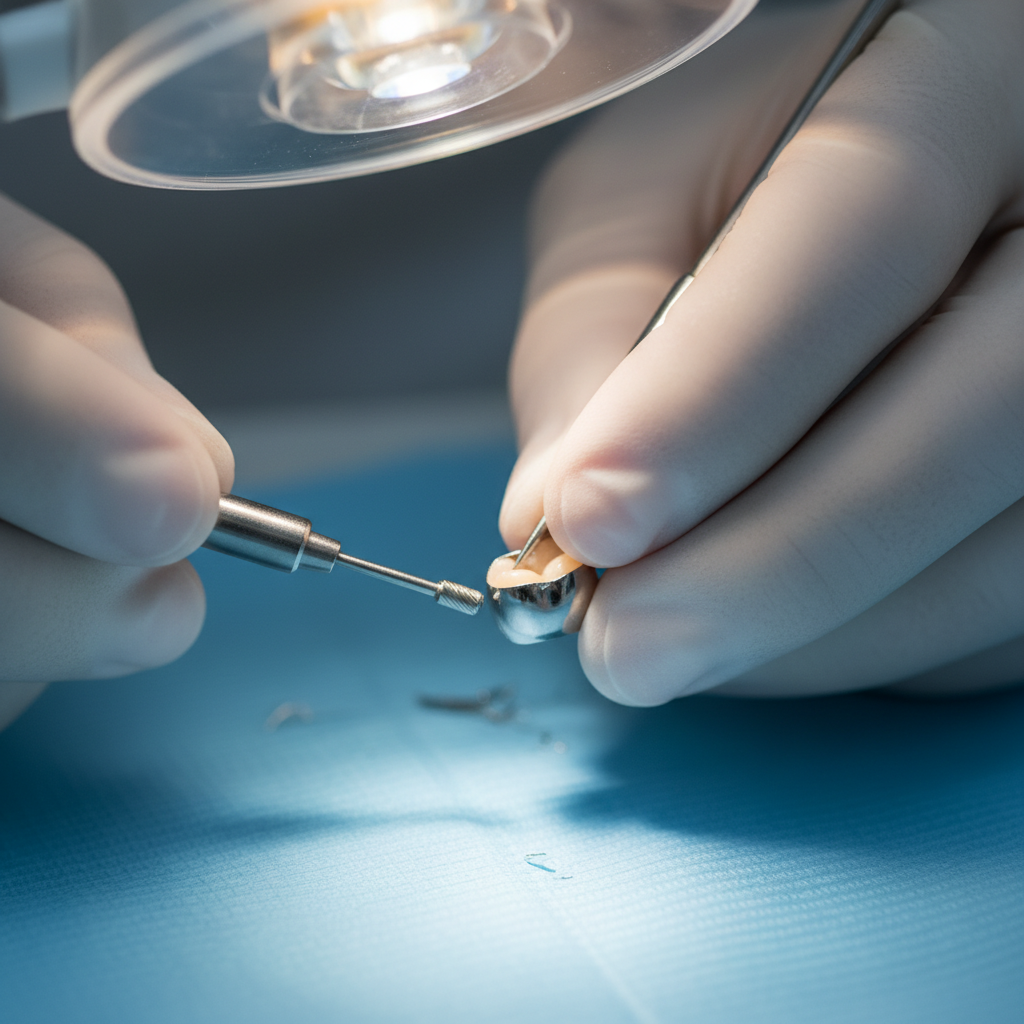
Cross-sectional diagram showing a damaged tooth with decay near the pulp chamber, and beside it the same tooth fitted with a ceramic crown sitting flush with the gum line

Left: weakened natural tooth. Right: crown seated over prepared tooth, protecting the root and pulp.

Crown
Gum line
Root
Bone

When more than 50% of a tooth's natural structure is compromised, a filling alone cannot provide enough support. The crown distributes biting forces evenly across the root, preventing the tooth from fracturing further. Modern zirconia and porcelain-fused-to-zirconia crowns are indistinguishable from natural enamel under normal lighting.

Treatment options compared

Porcelain-fused-to-metal (PFM)
All-ceramic / zirconia
Same-day CEREC crown

Step-by-step: what to expect

01
Consultation & X-ray

Digital X-rays confirm root health and bone density. Impression or scan taken.

02
Tooth preparation

Enamel is reduced by 1–2mm on all sides under local anesthetic. Temporary crown placed.

03
Lab fabrication

Your crown is milled or hand-crafted over 7–14 days to match your bite and shade.

04
Final seating

Temporary removed, permanent crown tried in, adjusted, and bonded with resin cement.

05
Follow-up

Bite check at 1 week. Crown integrates fully within 2–4 weeks as gum tissue settles.

Recovery milestones

  • Mild sensitivity to temperature for 1–2 weeks — normal as gum tissue heals
  • Avoid hard or sticky foods for 48 hours after final seating
  • Sensitivity should resolve within 4 weeks; call if it worsens
  • Floss carefully around the crown margin — plaque here causes the most long-term issues
Patient Result
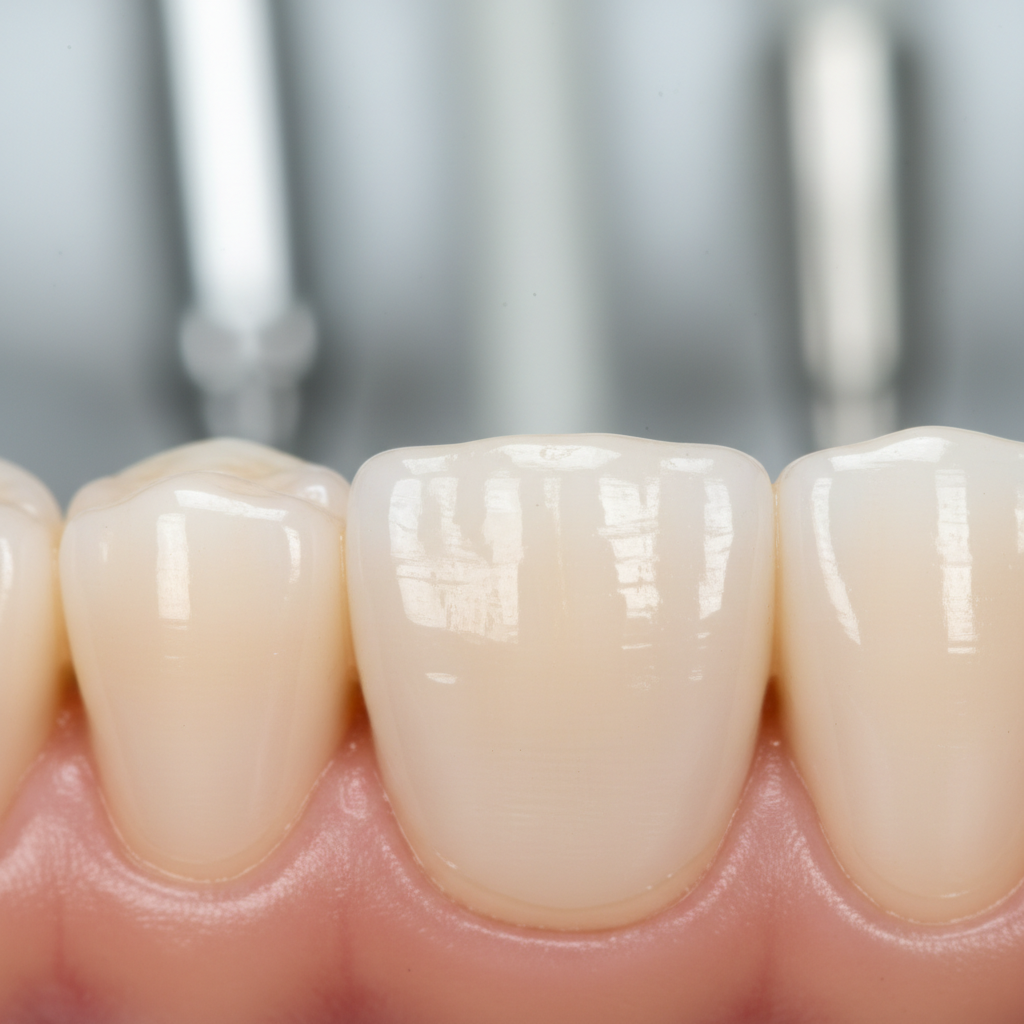
Patient smiling after crown placement showing a natural-looking ceramic crown on an upper molar, indistinguishable from surrounding teeth

Patient: Jennifer M., 44. Cracked molar restored with all-zirconia crown. Photographed 6 weeks post-seating.
Verified patient
BridgeDiagnosis

A dental bridge spans a gap left by one or more missing teeth, anchoring to the healthy teeth on either side.

The two flanking teeth (abutments) are crowned, and an artificial tooth (pontic) suspended between them fills the space.

Cross-sectional diagram of a three-unit dental bridge showing two crowned abutment teeth flanking a suspended pontic over an edentulous ridge

The pontic rests on the gum and is cemented to crowns on adjacent teeth — no surgery required.

Crown
Gum line
Root
Bone

Bridges have been the gold standard for replacing single missing teeth for over a century. Their advantage over implants is that no bone surgery is required and the entire process takes 2–3 weeks. The trade-off: the healthy adjacent teeth must be permanently modified to serve as anchors. For patients with adjacent teeth that already need crowns, a bridge is often the most efficient solution.

Treatment options compared

Traditional 3-unit bridge
Maryland (resin-bonded) bridge
Implant-supported bridge

Step-by-step: what to expect

01
Assessment & planning

Bone density and gum health evaluated. Shade and bite mapped digitally.

02
Abutment preparation

Both flanking teeth shaped under local anesthetic. Temporary bridge placed.

03
Impression & fabrication

Precision impression sent to lab. Bridge fabricated in 10–14 days.

04
Try-in & cementation

Bridge tried in for fit and aesthetics, then permanently cemented.

05
Flossing instruction

You'll receive a floss threader or water flosser to clean beneath the pontic.

Recovery milestones

  • Temporary bridge may feel slightly loose — avoid hard foods and do not floss the area
  • Gum soreness around abutment teeth for 5–7 days is expected
  • Final bridge may feel "high" for 1–2 days as your bite adjusts
  • Clean beneath the pontic daily — this area cannot be flossed normally
Patient Result
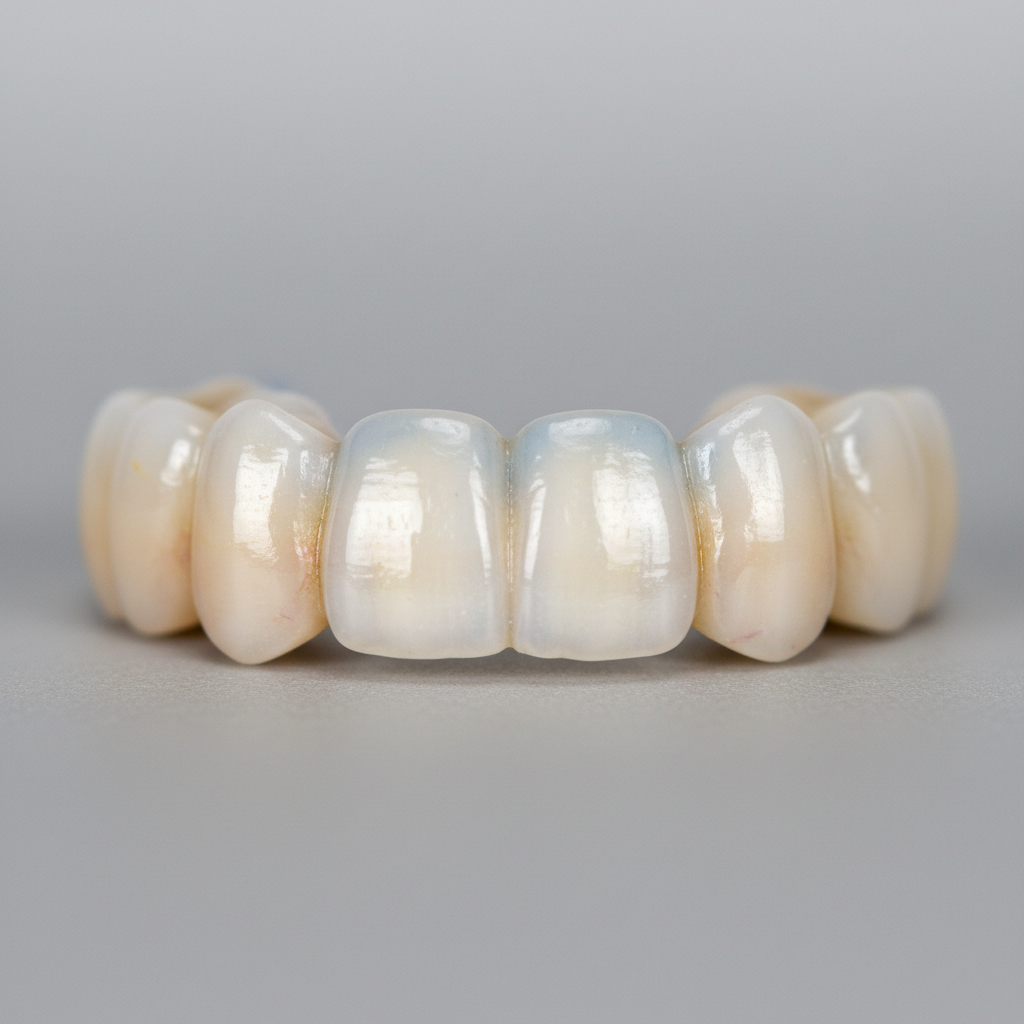
Close-up of a patient's lower jaw showing a three-unit porcelain bridge replacing a missing first molar, with natural color matching

Patient: Robert K., 52. Three-unit bridge replacing missing lower first molar. Photographed 3 weeks post-cementation.

Verified patient
Dental ImplantDiagnosis

An implant replaces the entire tooth — root and crown — becoming a permanent part of your jaw.

A titanium post is placed into the jawbone, fuses over 3–6 months (osseointegration), then receives a custom crown.

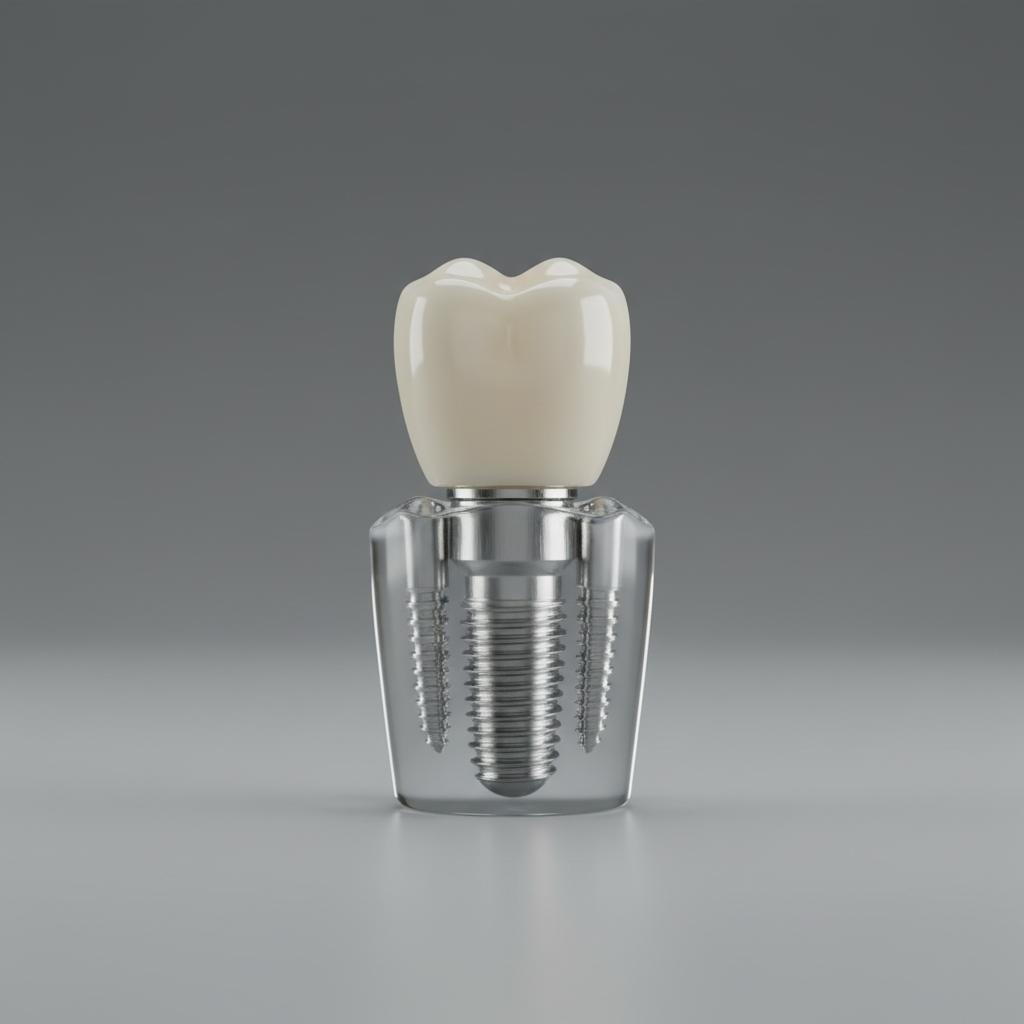
Cross-sectional diagram of a dental implant showing the titanium post integrated into jawbone, the abutment connector emerging through gum tissue, and the porcelain crown on top

Three components: titanium implant (root), abutment (connector), and ceramic crown (visible tooth).

Crown
Gum line
Root
Bone

Implants are the closest modern dentistry comes to regrowing a tooth. Because the titanium post stimulates the jawbone just like a natural root, bone loss — which occurs rapidly after tooth loss — is halted. The crown is completely independent of neighboring teeth, meaning no healthy tooth structure is ever compromised. The 20–30 year longevity of a well-placed implant makes it the most cost-effective option over a lifetime.

Treatment options compared

Standard implant + crown
Mini implant
Immediate (same-day) implant

Step-by-step: what to expect

01
Consultation & CBCT scan

3D cone-beam CT confirms bone volume, nerve position, and ideal implant angle.

02
Bone graft (if needed)

If bone volume is insufficient, a graft is placed and heals for 3–4 months before implant.

03
Implant placement surgery

Titanium post placed under local anesthetic or IV sedation. Healing cap placed. 30–60 min.

04
Osseointegration

Implant fuses to jawbone over 3–6 months. Temporary restoration worn during this period.

05
Abutment & final crown

Healing cap removed, abutment attached, final crown cemented or screwed in place.

06
Annual check

Annual X-ray verifies bone levels around implant. Professional cleaning every 6 months.

Recovery milestones

  • Days 1–3: Swelling peaks at 48 hours. Ice packs 20 min on/off. Soft diet only.
  • Days 3–7: Swelling recedes. Soreness managed with ibuprofen. Gentle rinsing begins.
  • Week 2: Most patients return to normal diet. Avoid the implant site when chewing.
  • Months 1–6: Osseointegration — no symptoms expected. Temporary crown in place.
Patient Result
Patient showing a full smile after single dental implant placement, with the implant crown perfectly matching the shade and contour of adjacent natural teeth

Patient: Maria Santos, 38. Single implant replacing missing upper lateral incisor. Photographed 6 months post-loading.

Verified patient
DenturesDiagnosis

When multiple or all teeth in an arch are missing, a denture restores both function and facial structure.

Modern dentures range from removable full arches to implant-retained designs that eliminate slipping permanently.

Cross-sectional diagram comparing a conventional full denture resting on the edentulous ridge versus an implant-retained overdenture snapping onto four implant attachments

Left: conventional denture on ridge. Right: implant-retained overdenture — 4 implants eliminate movement.

Crown
Gum line
Root
Bone

The stigma around dentures is outdated. Current acrylic and flexible materials, combined with digital fabrication, produce dentures that fit precisely and look indistinguishable from natural teeth. The critical decision is whether to add implant retention — even two mini implants in the lower arch eliminate 90% of the instability complaints that give dentures their reputation.

Treatment options compared

Conventional full denture
Immediate denture
2-implant overdenture
4-implant overdenture

Step-by-step: what to expect

01
Impressions & bite registration

Precise molds capture ridge shape. Bite relationship recorded to set tooth position.

02
Wax try-in

Teeth set in wax — you see and approve the look before anything is finalized.

03
Processing & delivery

Wax converted to acrylic. First delivery includes adjustment appointments.

04
Adjustment period

2–4 adjustments over 4–6 weeks as ridges adapt. Sore spots addressed at each visit.

05
Reline at 6 months

Ridge remodels after extractions — reline refits the denture to the changed shape.

Recovery milestones

  • Week 1: Increased salivation and difficulty speaking are normal — both resolve quickly
  • Eat soft foods cut into small pieces for the first 3–4 weeks
  • Remove denture at night to allow tissue to rest — this is not optional, it prevents bone loss
  • Adhesive is a temporary crutch — persistent need for adhesive means a reline is needed
Patient Result
Older patient smiling confidently showing a full upper denture with natural tooth proportions and realistic gum coloring

Patient: Dorothy W., 67. Full upper denture with implant-retained lower overdenture. Photographed 8 weeks post-delivery.

Verified patient
Full-ArchDiagnosis

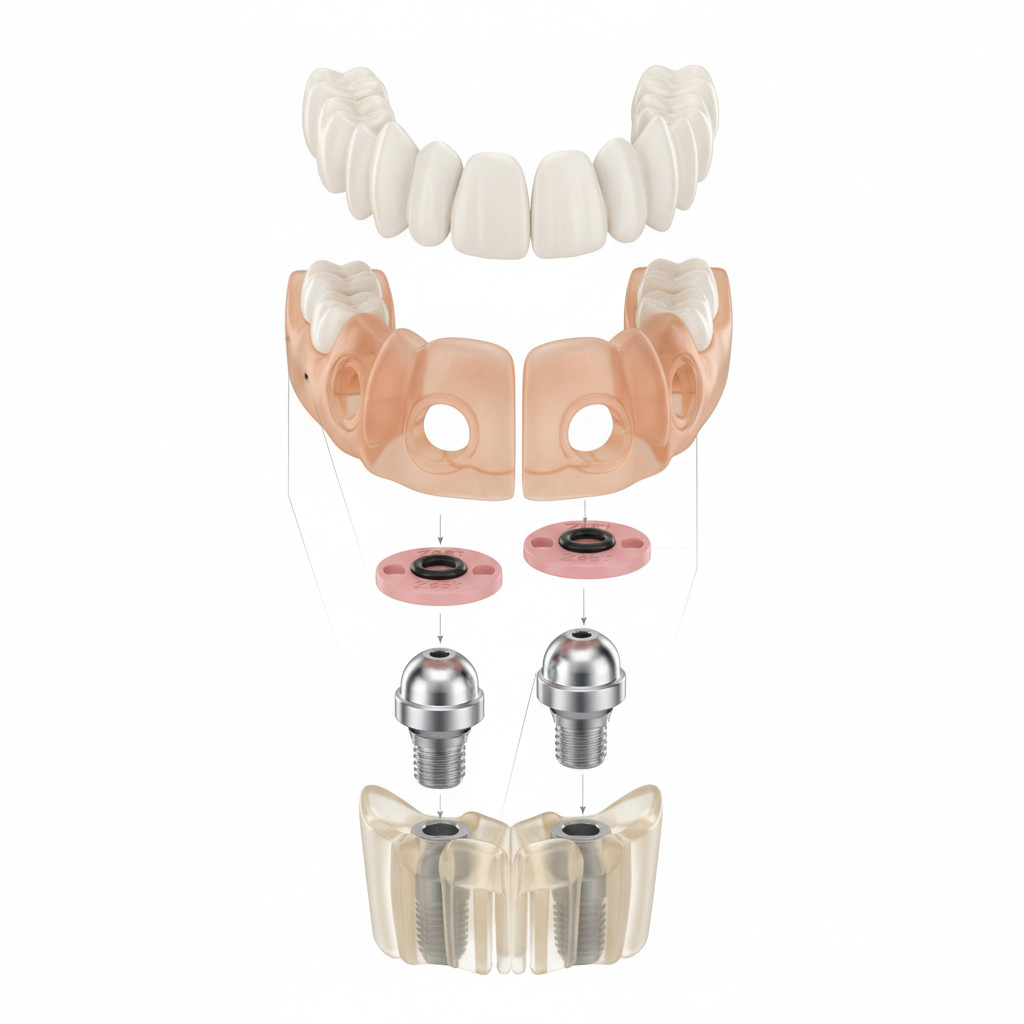
Full-arch reconstruction replaces an entire jaw of teeth with a fixed, non-removable prosthesis supported by implants.

All-on-4 and All-on-6 protocols deliver a complete arch of teeth in a single surgical appointment — often the same day.

Cross-sectional diagram of a full upper jaw showing four implants placed at strategic angles supporting a fixed zirconia bridge spanning all twelve teeth positions

Four implants — two anterior vertical, two posterior angled — support a full arch without bone grafting in most cases.

Crown
Gum line
Root
Bone

Full-arch reconstruction is the most transformative procedure in modern prosthodontics. Patients who have lived with failing teeth, chronic infections, or complete tooth loss can leave the office on the day of surgery with a fixed, functional smile. The angled posterior implants in the All-on-4 protocol bypass the sinus and avoid the need for bone grafting in most patients — reducing treatment time from 12–18 months to 1 day for the surgical phase.

Treatment options compared

All-on-4 (4 implants)
All-on-6 (6 implants)
Zygomatic implants

Step-by-step: what to expect

01
Comprehensive evaluation

CBCT scan, medical history, blood work. Full treatment plan with cost breakdown provided.

02
Extractions + implant placement

All failing teeth removed. Implants placed in same surgery. Temporary fixed arch seated same day.

03
Soft-food healing phase

4–6 months on soft foods while implants osseointegrate. Temporary arch looks and functions normally.

04
Final arch fabrication

Precise impressions of osseointegrated implants. Zirconia or hybrid arch custom-fabricated.

05
Final delivery

Temporary arch removed, final arch tried in, adjusted for bite and aesthetics, then screwed in permanently.

06
Annual maintenance

Annual X-rays and professional cleaning with specialized instruments. Arch removed for deep cleaning every 3–5 years.

Recovery milestones

  • Days 1–5: Significant swelling. Head elevated, ice packs, prescribed pain management. Liquid diet.
  • Week 2: Swelling 70% resolved. Soft diet begins. Temporary arch functional for speaking.
  • Month 1: Return to office diet (avoid hard foods, seeds, anything that requires heavy biting force).
  • Months 2–6: Osseointegration. Temporary arch worn. Most patients report high quality of life during this period.
Patient Result
Patient showing a complete smile transformation after full-arch reconstruction, with a full set of natural-looking zirconia teeth in both upper and lower jaws

Patient: Thomas H., 58. Full-arch All-on-4 upper and lower. Photographed 6 months after final delivery.

Verified patient
The Process

From first appointment to final smile — here's every step.

Every prosthodontic journey follows the same six phases. Your timeline may compress or expand, but nothing will surprise you.

Day 101

Consultation

A full clinical and radiographic assessment. You'll leave with a written treatment plan, cost breakdown, and no unanswered questions.

Digital X-rays, CBCT scan if needed, periodontal charting, bite analysis, shade matching, and a frank conversation about your goals and timeline.

Week 102

Imaging & Planning

3D imaging maps your bone anatomy to the millimeter. Surgical guides and prosthetic designs are created digitally before anything touches your mouth.

Cone-beam CT, digital impressions, virtual implant placement planning, smile design preview, and lab communication.

Week 2–403

Preparation

Any extractions, bone grafting, or gum treatment needed before restoration. Some patients skip this phase entirely.

Extractions under local anesthetic or sedation, bone graft placement, socket preservation, healing time as needed.

Month 1–204

Placement

The restorative work begins. Implants placed, teeth prepared for crowns, or denture framework tried in.

Implant surgery, crown preparation, bridge abutment shaping, or denture framework delivery. Temporaries placed same day.

Month 2–605

Healing

Osseointegration for implants. Tissue maturation for crown and bridge cases. You're functional throughout.

Regular check-ins at 2 weeks, 6 weeks, and 3 months. Bite adjustments as needed. Temporary prosthesis remains in place.

Month 4–706

Final Restoration

The permanent restoration is seated. Final bite adjustments made. Before-and-after photographs taken.

Final crown cementation, bridge delivery, denture delivery, or implant crown placement. Full aesthetic and functional evaluation.

Ready to start your journey?

Patient Results

Clarity first. Then confidence. Then the result.

Every patient below walked in with the same uncertainty you feel right now. Here's what happened when they understood their treatment before they started it.

94%

of patients say they felt prepared walking into their first appointment

4.9★

average patient satisfaction rating across all procedures

2,400+

restorations completed since 2020

98%

implant success rate at 5-year follow-up

Jennifer M., a 44-year-old woman smiling warmly, showing her restored smile after crown placement

Jennifer M., 44

Zirconia Crown

3 weeks total

"

I came in terrified. My dentist had said "root canal and crown" and I couldn't sleep. The diagrams here showed me exactly what would happen — by the time I walked into the office I felt prepared, not panicked.

Pain-free. Zero sensitivity. Natural appearance.

Robert K., a 52-year-old man smiling confidently after dental bridge placement

Robert K., 52

Three-Unit Bridge

2.5 weeks total

"

My wife found this site at midnight when I was too overwhelmed to Google anything myself. By morning she had printed the bridge comparison table and brought it to my consultation. The dentist said it was the best-informed first visit she'd had in years.

Eating steak again. No one can tell it's a bridge.

Maria Santos, a 38-year-old woman with a bright natural smile after implant restoration

Maria Santos, 38

Single Dental Implant

5 months total

"

The osseointegration timeline scared me — six months felt like forever. But the recovery milestone guide here told me exactly what "normal" looked like week by week. I never once called in a panic.

Permanent. Indistinguishable. Worth every week of waiting.

Thomas H., a 58-year-old man smiling broadly showing his complete smile after full-arch reconstruction

Thomas H., 58

All-on-4 Full Arch

6 months total

"

I had avoided the dentist for eleven years because I was ashamed of my teeth. My daughter showed me the full-arch spoke here. I cried reading the "day of surgery" section — not from fear, but from relief that someone had finally explained it like a human being.

Complete smile transformation. First photo in 11 years.

Take the Next Step

You've done the research. We'll do the rest.

Book a consultation — or send yourself the estimate summary. Either way, you're not alone in this.

This helps our front desk prepare before your call — and ensures the right clinician is available.

We'll confirm within 2 business hours. No spam, no automated calls.

Your information is private and never shared.

A human calls you — no robocalls, ever.

Response within 2 business hours, guaranteed.

Confirms within 2 hours · No robocalls